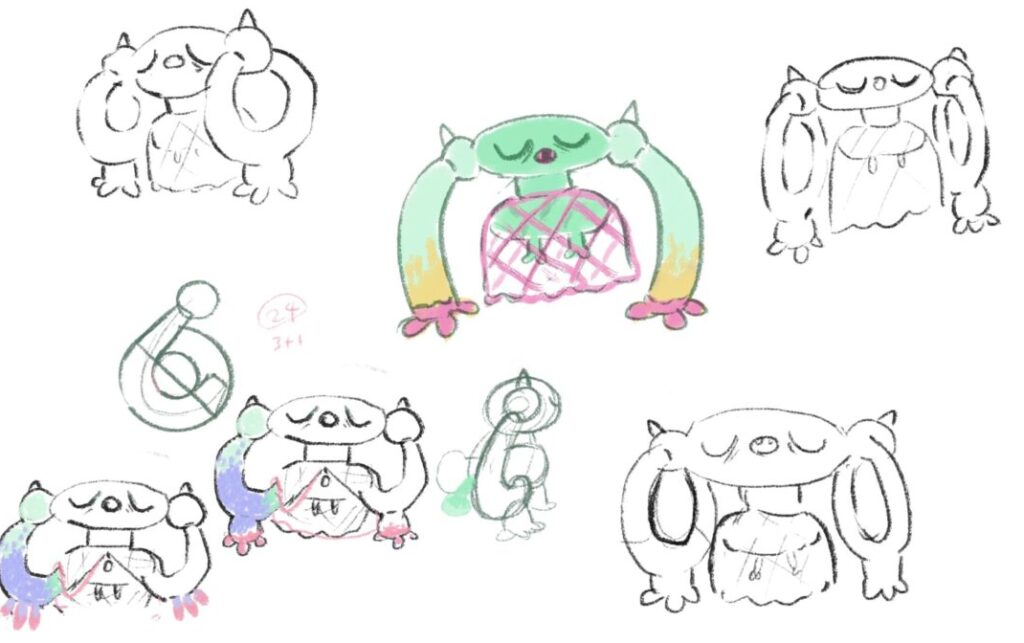
I haven’t been able to write in my diary for a while. The reason is simple: it was just a hassle to write. From this time on, I’m switching to a method where I feed voice memos into Claude to have it convert them into diary entries. AI takes the diary audio recordings where I speak very falteringly and adjusts them to match the writing style of my past diary entries. I hope this allows me to update a bit more casually. A lot of events took place until now as well, but I hope to write about those on another day.
As for what I’ve been up to lately, it’s various things surrounding solar power. I think there’s a vision of sci-fi called Solarpunk, the kind that depicts a sustainable and hopeful future that properly copes with the environment while utilizing renewable energy like solar power. Partly because I’ve been hooked on Star Trek for a long time, I’d been thinking about that kind of worldview in various ways.
Right around that time, I was overcome with anxiety because the Strait of Hormuz was blocked and the future of energy became completely unpredictable. Driven by that anxiety, I ended up using up accumulated Amazon points to buy a portable power station relatively cheap. I also introduced solar panels and installed them on the roof to generate solar power. Our place is located at an elevation of around 900 meters, and until last year, we managed to barely survive without an air conditioner. However, I’d be in real trouble if the computer in my workspace broke down, so I finally installed an air conditioner this year. (The electrician who installed it for me turned out to be an original member of Kyoko Koizumi’s fan club and a current huge fan of Seiko Matsuda! He and I are pals who actually watched the live cinema viewing of Kyoko Koizumi’s 2026 tour final together at a movie theater.)
Since this is an old house, there was a concern that running two AC units simultaneously—in the living room and in my room—might trip the circuit breaker. So I thought I’d take the opportunity to experiment and see if I could run the air conditioner solely on electricity from the solar panels.
I set up the solar panels and the portable power station in place. I collected data on how much power was generated, fed it to Claude along with research papers on solar power generation, and had it calculate the optimal installation angle based on the latitude and longitude of my home. I adjusted it accordingly with simple DIY work. So far, I’ve been running the AC set at 28 degrees Celsius from around 11 a.m. to 6 p.m. On sunny days, generation and consumption are roughly even; the portable power station’s battery level stays between 60% and 70% from a full charge, and even on bad days it only drops to around 30%. Between 6 a.m. and 10 a.m. in the morning, it recovers nearly back to full. Even now in early August, all power for the air conditioner is covered by solar energy. Not needing an AC at night is a huge advantage of living in a highland region. Though it gets unbelievably cold in winter.
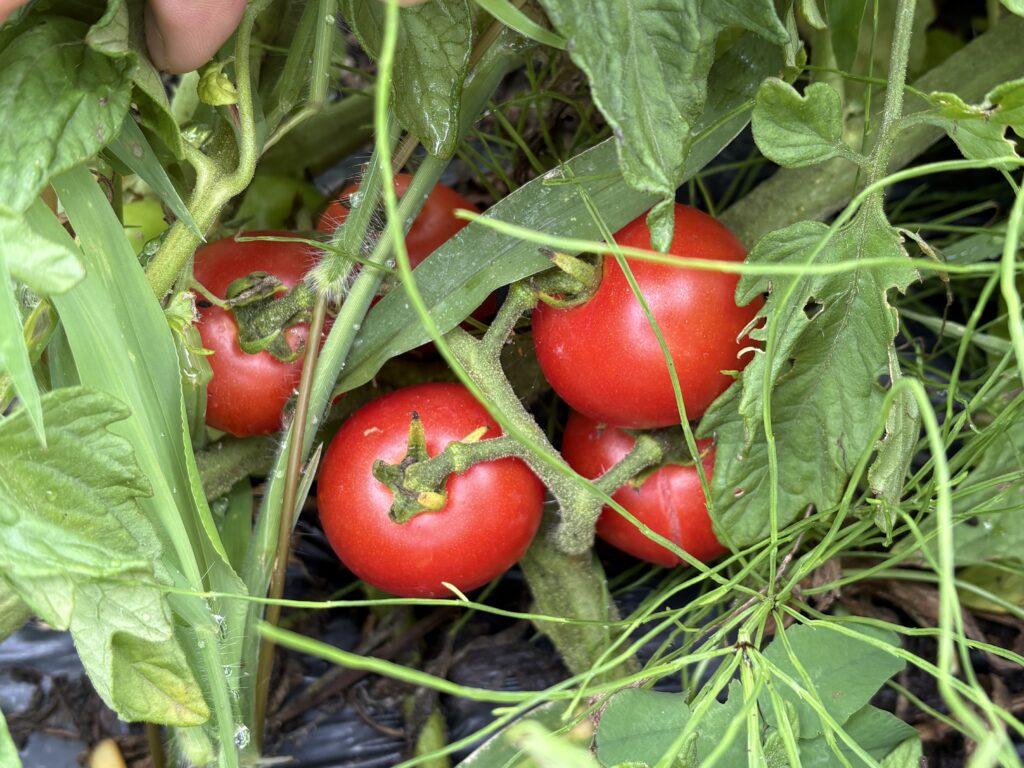
I also worked a bit harder on the vegetable garden in the yard this year. Using seedlings bought from a neighbor who takes care of us, I planted carrots, tomatoes, kale, corn (which I’d been wanting to try for a long time), and more. The tomatoes in particular produced a massive yield; I thought I didn’t care for tomatoes all that much, but eating fresh-picked ones with a sprinkle of salt is amazingly delicious. Getting them fresh-harvested makes me feel remarkably happy.
A few ears of corn got eaten by wild animals. I tried taking measures with netting, but they were eaten right through the net or knocked over—was it a masked palm civet, a fox, or a raccoon dog? Speaking of which, I once saw a young fox wander into the yard at dawn. Just when I thought it was gazing blankly at the sunrise, it suddenly started hopping around, which was incredibly charming.
Today, I was able to harvest an ear of corn, so I steamed it and ate it. While I think the taste itself was about the same as commercial ones, it felt as though I was eating the whole experience—from planting the seed, thinning out the sprouts, applying fertilizer, and weeding—which felt fresh and rewarding. There really is a joy in “eating the experience.” Also, when I peeled the husk and saw the glossy, beautiful yellow kernels emerge, I was genuinely moved.
I want to learn how to grow much more corn in the future.
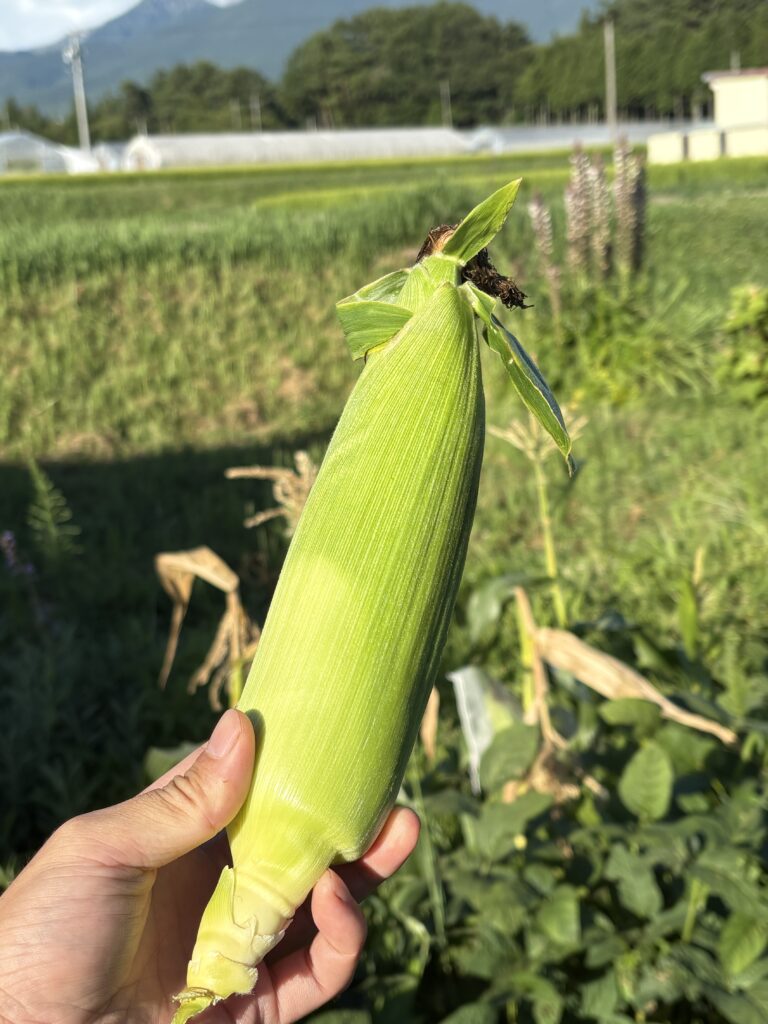
Tomatoes are growing enough to harvest every day, expanding their territory rapidly. They are overgrown to the point where you really have to search hard to find the red ones. Parting the leaves, finding a deep red one, washing it, and eating it with salt is absolute perfection. Though I’m sure it tastes great even without salt.
The onions planted since last winter also turned out well this year. I think planting them in a spot that had been left fallow for almost a year worked in our favor. Last year’s were small and ended up as a failure, but this year produced nice, large, round ones. Garlic also succeeded. I really love that period of waiting over half a year through the winter for them to grow larger, making onions my most successful home-garden crop so far.
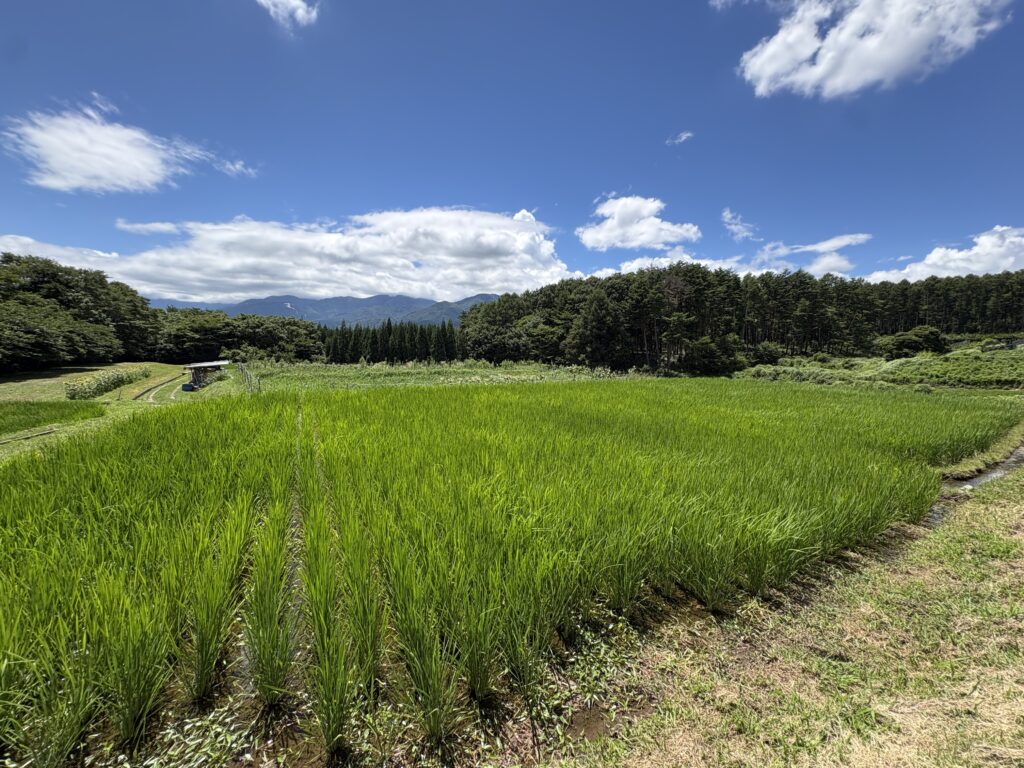
In addition, there’s a rice field I manage with friends, and I go to check the water status every day. In between work—creating animations and drawing illustrations—there is time to touch the soil.
Getting bitten by bugs makes me annoyed. The sky is so overwhelmingly summery that it almost makes me laugh. Spending my days like this.