1:30 AM.
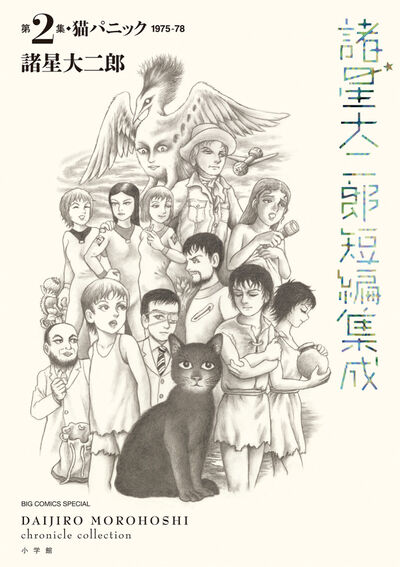
I heard there was a special one-shot by Daijiro Morohoshi in the latest issue of Big Comic magazine, so I headed to the convenience store during a work break.
The cold wave stings my skin. Fine snow is dancing in the air. A thin layer of snow dyes the ground pure white, so smooth that I feel a sense of guilt for leaving footprints behind. Behind the cloud-covered mountains, the lights of the ski resort line up in a faint glow. The snow reflects all the light, making the rural roads feel bright despite the few streetlights.
Since moving to Nagano, I’ve grown accustomed to the immense winter cold. The winter air sharpens the outlines of the scenery. Filling my lungs with the piercingly cold air clears my mind. There’s nothing quite like the feeling of sleeping in a bed warmed by a hot water bottle. I’m starting to like winter more than summer.
On the way back, I found animal tracks. I thought it might be a fox, but it wasn’t the straight-line gait typical of a fox, so it might be a cat. It seemed a bit small for a cat, so maybe a raccoon dog (Tanuki). I’m not sure, but it seems something just crossed this path a moment ago.
I love how time is etched into the winter roads at night like that.
I’m reading Daijiro Morohoshi’s one-shot in front of the heater. An absurdist mystery set on a spaceship. Why is his art style so captivating? Apparently, the “Daijiro Morohoshi Short Story Collection (12 volumes total)” will be released soon.
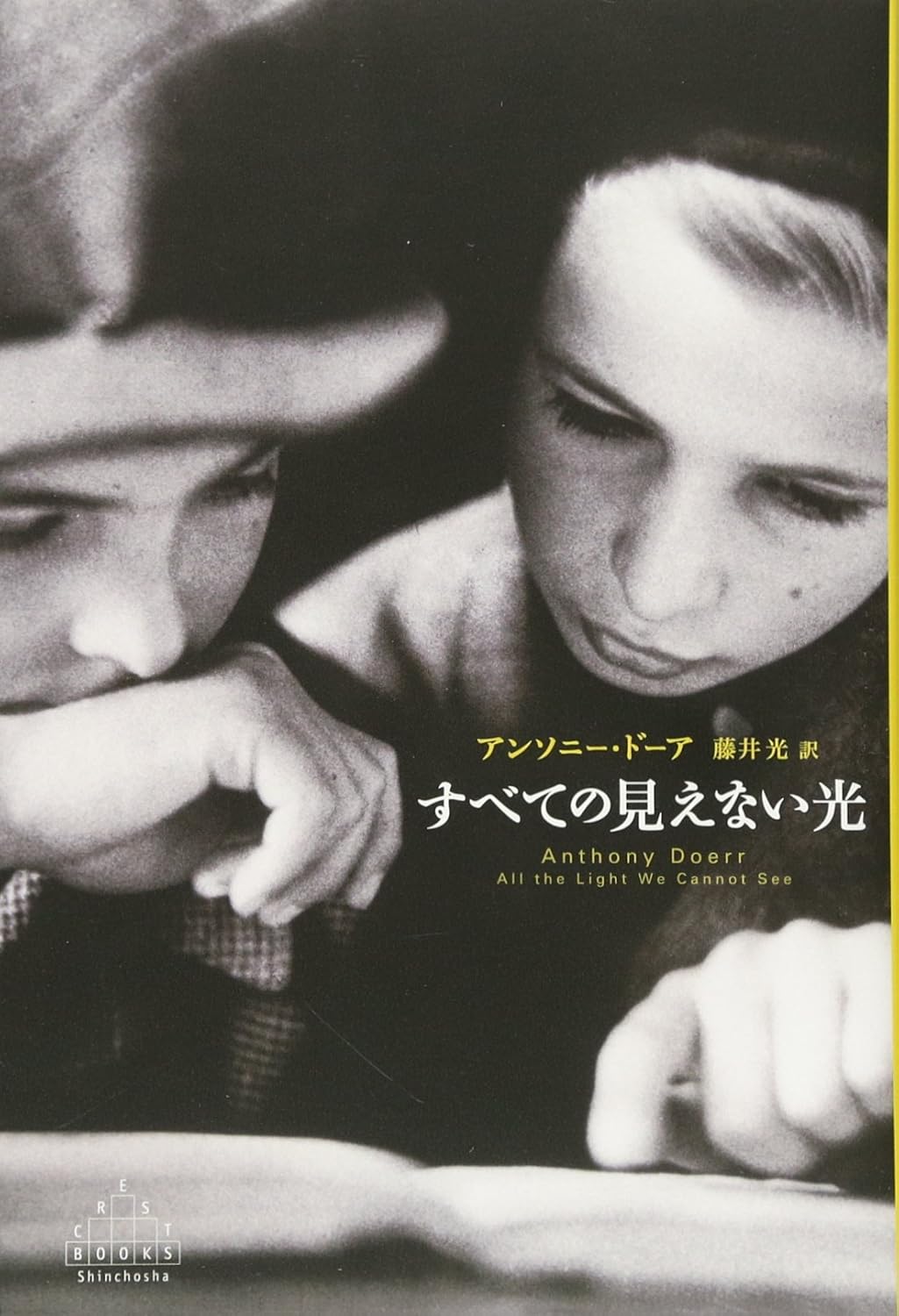
I just finished reading the novel recommended by a friend, “All the Light We Cannot See” (by Anthony Doerr, Hayakawa epi Bunko). As I mentioned in my diary before, it’s a paperback as thick as a slice of Texas toast, and I had absolutely no confidence that I could finish it. I started reading with zero prior knowledge or even a summary, yet I ended up devouring all 700 pages in one go. For me, this is quite an extraordinary feat.
After finishing every last page, I close the book, gaze at the cover, and after fully feeling its physical mass, I let out a long, deep breath, letting my thoughts drift into the landscapes within the story. “I’m so glad I read this…” I feel it from the bottom of my heart. Ten seconds later, it hits me: *So this is what they call the afterglow of a great book!*
The story is set in France during World War II, as the German invasion looms. It follows the lives of two people: Marie-Laure, a blind girl living in Paris, and Werner, an orphan raised in Germany with a brilliant talent for science. The narrative weaves back and forth between their paths.
Freedom being stripped away by war; the beauty of science and how it is perverted into a technology for killing; the kindness and betrayal of people in the depths of despair; the casual violence scattered on the roadsides; resistance and hope; radio waves; music… everything was packed into these pages.
The entire novel is composed of a series of short fragments, ranging from one to ten pages. Even for those who say, “I’m not confident about reading long novels!” it’s likely an easy read. Moreover, the way each fragment ends is so incredibly sharp it makes you shiver. “Can writing really be this cool?” I found myself reading on, completely enchanted by the prose.
Since it is a story of war, it is inevitably tragic and heavy. However, as you follow the protagonists’ lives, the book is also filled with thrilling and suspenseful entertainment: a foreign radio broadcast heard secretly as a child; the whereabouts of a “cursed” giant diamond in a Parisian museum and the Nazi officer pursuing it (his portrayal is terrifying); life at a Spartan Hitler Youth school trying to survive with a friend; and the secret maneuvers of women trying to resist in a German-occupied city.
And since all these threads converge into the title “All the Light We Cannot See,” the final stretch was just… overwhelming!
In the real world, the “worst” is being updated every single day, as if there were no bottom. In the novel, the town of Saint-Malo, where the protagonist fled from Paris, is also gradually occupied by the Nazis. Everything that was once taken for granted is stolen, one by one.
“Madame, is it that we’re like ostriches, sticking our heads in the sand when danger approaches? Or is it they who are the ostriches?”
“Maybe everyone is an ostrich,” she whispers. (Translated from p. 236 of the Japanese edition)
In reality, the idea that “an ostrich hides only its head in the sand to pretend nothing is happening when it senses danger” is just a myth. Perhaps humans are the only ones who actually do that (the Ostrich Effect).
I feel like we have to pull our heads out of the sand now—before it’s too late for everything. That’s what I’m thinking.
Until I finished this novel, I refrained from looking up things like Saint-Malo, where the story is set. I wanted to build the images in my head using only the information within the book. Now, I think I’ll watch the screen adaptation. I want to see how much it differs from the scenery I saw in my mind while reading, and how they translated the original work into film. I’m looking forward to experiencing it that way.
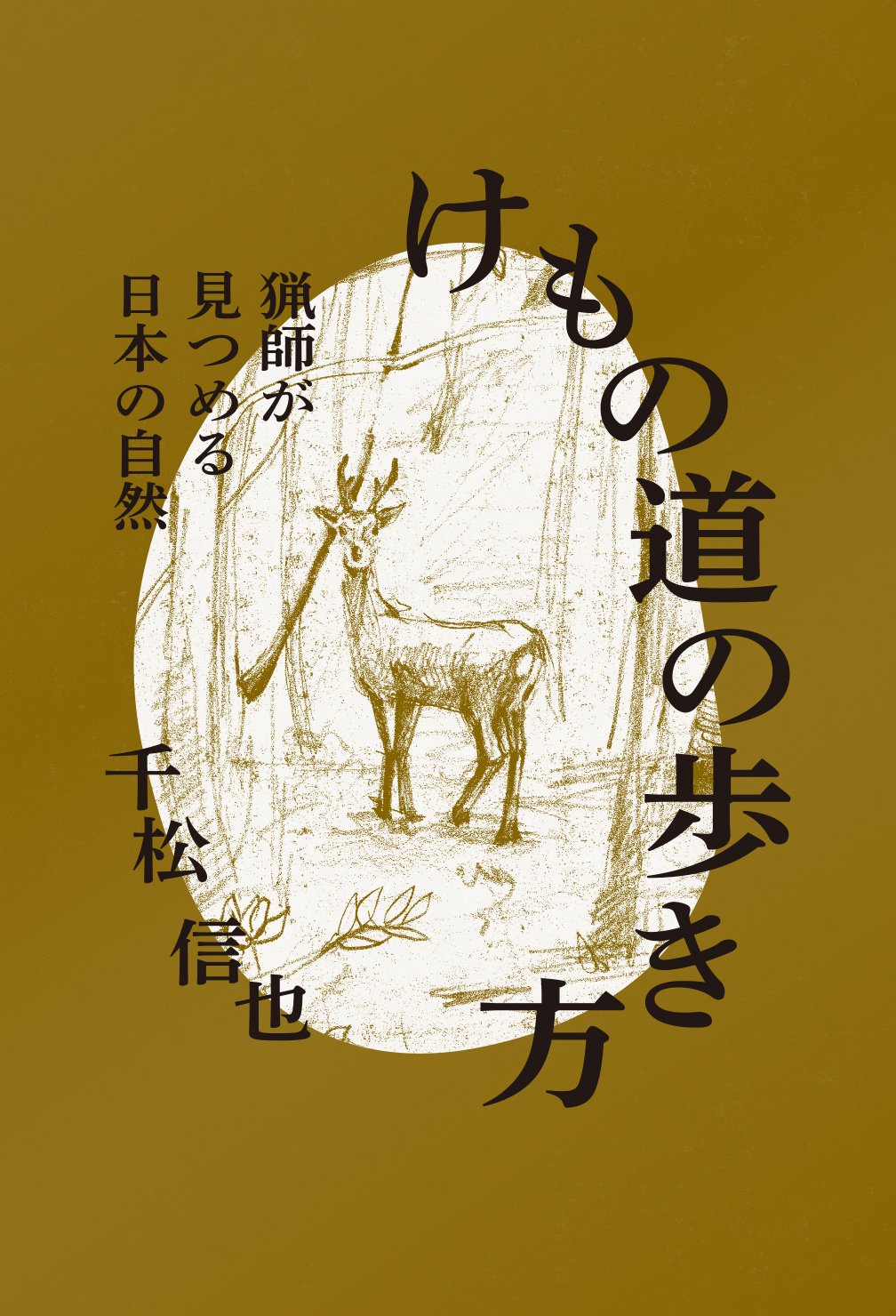
I read “How to Walk on Beast Trails” (Written by Shinya Senmatsu, Little More, 2015), which I bought at the new “Bookstore YamaYama” located in a repurposed, former library in Tatsuno Town.
This is a collection of essays by an author who practices trap hunting in Kyoto, discussing Japanese nature from a hunter’s perspective. For each familiar animal like deer or wild boar, he shares insights into their ecology and hunting based on his own experiences. Living in Nagano, I have people nearby who hunt, yet this book allowed me to peer into a world I knew nothing about.
There is a wonderful part where he feels that he, as a hunter, is just another animal like his prey. He notes that once the hunting season has progressed and he’s acclimated, he can sense whether a catch has been made just by the atmosphere of the forest:
“It might sound extreme, but even a single displaced twig or one overturned leaf can convey the movement of the prey.” (Quoted from page 60 of the same book)
In a book I read previously, “The Wimp Anthropologist Goes to the Desert” (Written by Kodai Konishi, Yamato Shobo), there was a scene describing desert dwellers in India hunting by moonlight, while the author from Japan was bewildered, unable to see anything. It makes me realize that while technology brings many benefits, there must be various innate human abilities that we are losing in exchange.
I also loved the inclusion of hunting experiences and the history of animals living in satoyama (borderland forests) beyond just deer and boar—badgers, raccoons (they live in Japan too!), and various birds. I had no idea that the feral pigeon (dobato) came to Japan from around Europe during the Asuka period. The fact that these historical and ecological details are listed with precise citations makes the book even more captivating. The list of books I want to read just keeps growing!
Above all, I find it deeply moving how the author, Senmatsu-san, continuously grapples with the weight of taking an animal’s life, and how those swirling, unresolved thoughts are laid bare on the page. Furthermore, the chapter regarding the impact of radiation on wildlife following the Fukushima nuclear accident is profoundly compelling.
I remember feeling a strange joy when I spotted badgers and masked palm civets in Nakameguro during the COVID-19 pandemic when humans had disappeared from the streets. Flocks of feral parakeets, and abandoned turtles sunbathing along the Meguro River… even in the megalopolis, there is an ecosystem, and I used to watch it for hours.
Now, I take a walk every day in Nagano (for my diet!). I don’t necessarily go deep into the mountains, but I’ve seen a serow (it was so motionless I thought it was a piece of contemporary art left in the woods), and I occasionally spot deer, foxes, and badgers—mostly at night. There are troops of monkeys with their young, woodpeckers, and wagtails that fly as if guiding my way—yesterday, I even saw a grey wagtail. Its vivid yellow stood out beautifully against the forest. I’m not well-versed in plants yet, but I’m so happy that there are things I want to know right here in my daily life, and that this curiosity continues to grow.
This book is packed with phrases I absolutely love. The opening is incredible: “Hey, Kodai. Don’t you think the whole world is made of wind?” I didn’t quite get it at first, but it felt powerful! (And as I read on, I started to understand.)
It completely flips the image of a “smart anthropologist” who elegantly unravels the secrets of hidden cultures. Instead, it’s a lighthearted “story” that doesn’t hide his failures or his “wimpiness” during fieldwork. The story begins when he leaves for India, prompted by his university mentor’s lecture: “Go savor the foreignness of the world to your heart’s content—let it toss you around and break who you are.” I love that it’s a journey not of “self-discovery,” but of “self-destruction.”
I couldn’t help but laugh at how he ended up holed up in his hotel room in 90s India because he was so terrified, and I appreciate that he wrote it all down. Through various encounters, he eventually reaches a village in the desert. At first, he’s welcomed, but after a week, everyone gets used to him and starts scolding him mercilessly. His belongings become like communal property, and no one ever says “thank you.” From rituals for slaughtering sheep to a witch doctor who treats cobra venom and midnight hunting (where only the author can’t see a thing because it’s so dark)—episode after episode of an unimaginable world kept me turning the pages. It’s also great as an anthropology book because he provides interpretations based on previous research for these events.
A key word in this book is “Anger.” I was deeply moved by how he derives a perspective for overcoming individual differences through the way anger is expressed in Indian society—both in being scolded and in getting angry.
While I was working, I noticed that “Cops vs. Thugs“ (1975, directed by Kinji Fukasaku, screenplay by Kazuo Kasahara) was being live-streamed for free on an official YouTube channel. Even though I caught it halfway through, I couldn’t stop watching.
It’s a bromance movie about a “no-good cop” and a “no-good yakuza.” Re-watching it now, the direction and composition are just brilliant.
For example, the scene where the corrupt relationship between the police and the yakuza falls apart—the shift in the power balance through their verbal sparring is staged so dynamically with beautiful framing (and in a long take!). Also, the violent scene where they writhe around in blood to the BGM of the song “Konnichiwa Akachan(Hello Baby)” playing on TV is absolutely incredible. The “over-the-top” and intense facial acting by Bunta Sugawara and Hiroki Matsukata is just great.
Later, the novel “All the Light We Cannot See“ (Anthony Doerr), which my friend recommended, arrived. It’s a paperback as thick as a slice of Texas toast, so I’m a bit worried if I can finish it. Once I’m done reading, I’ll watch the Netflix series.
I was reading a book I wanted to read, but before I knew it, my interest shifted and I was reading something else. This is how my unread books pile up. Last night, I read “The World Seen from the Natives’ Perspective” and “A Struggling Anthropologist in the Desert,” short stories from Spanish horror, one chapter at a time, before falling asleep. I had a strange dream where they all blended together.
 I read “How to Walk on Beast Trails” (Written by Shinya Senmatsu, Little More, 2015), which I bought at the new “